
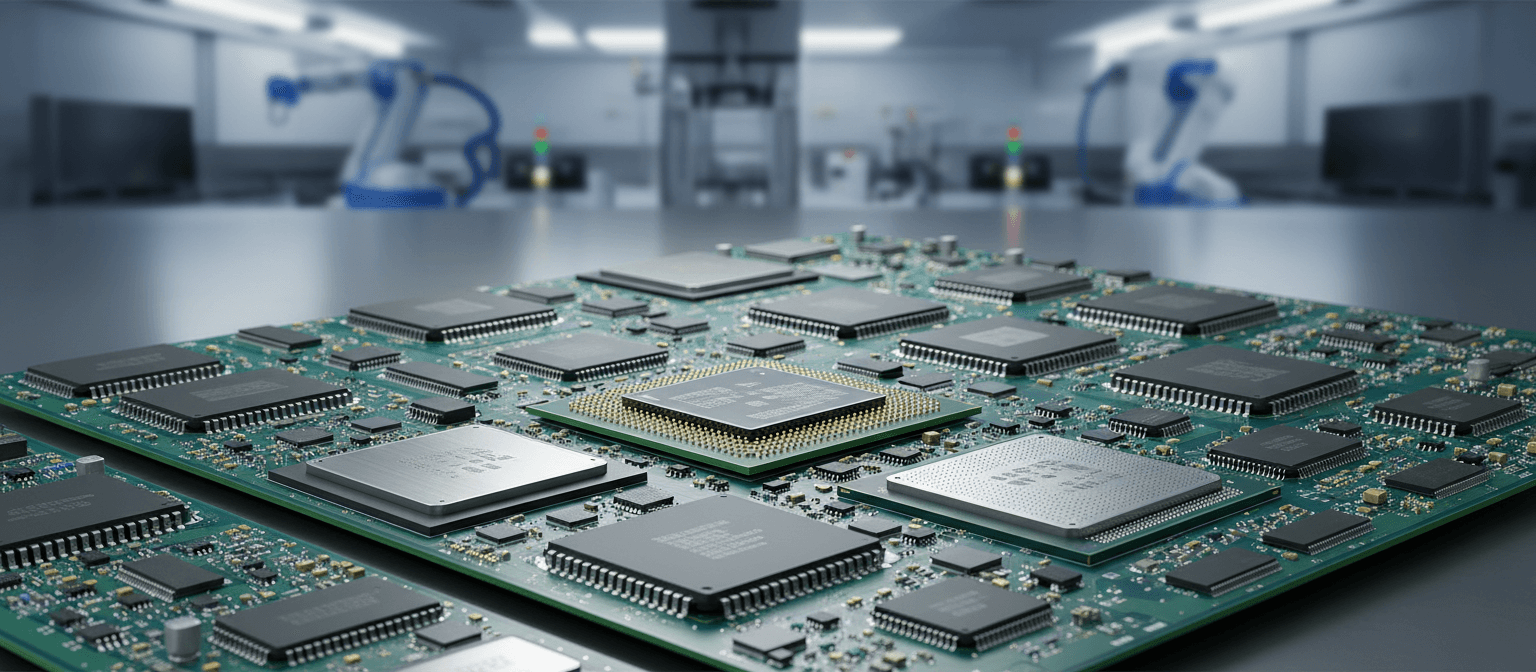
Microchips directly affect your project's performance and supply chain reliability. Through ARTEK.az, you can source original ICs, SMT, and BGA components from leading global brands, minimizing procurement risks. You can obtain microcontrollers, ADC/DAC converters, memory chips, and sensor interface ICs tailored to your requirements, supported by industry-standard supply solutions and technical assistance.
This article provides practical information about different types of microchips, B2B supply solutions in Azerbaijan, supply chain quality considerations, and product optimization. Its purpose is to help you accelerate project development, ensure product authenticity, and improve your online visibility through the right keyword strategy. It also explains modern application areas, industrial requirements, and practical steps to optimize procurement lead times.
The Main Role and Types of Microchips
Microchips enable computing, signal processing, memory functions, and sensor connectivity in electronic devices. They are categorized into specialized ICs for different functions, and each type has its own requirements—including performance, power consumption, SMD/SIP package types, and industrial certifications—that directly influence the success of your project.
Importance of Microchips in the Electronics Industry
Microchips are the foundation of modern electronics. They determine a product's size, power efficiency, and functionality. Whether you are developing an industrial automation system or an IoT solution, you should carefully evaluate operating temperature range, EMI/ESD characteristics, and MTBF (Mean Time Between Failures).
Industrial-grade components with operating temperature ranges from –40°C to +85°C or up to +125°C provide long-term reliability.
When selecting the package type (SMT, BGA, QFN), plan your assembly process and future repair or maintenance requirements in advance.
Microcontroller and Microprocessor Types
Microcontrollers (MCUs) and microprocessors (MPUs) differ in architecture and intended application. If your project requires real-time performance and extensive input/output interfaces (GPIO, ADC, UART, SPI, I²C), ARM Cortex-M series microcontrollers are often the optimal choice.
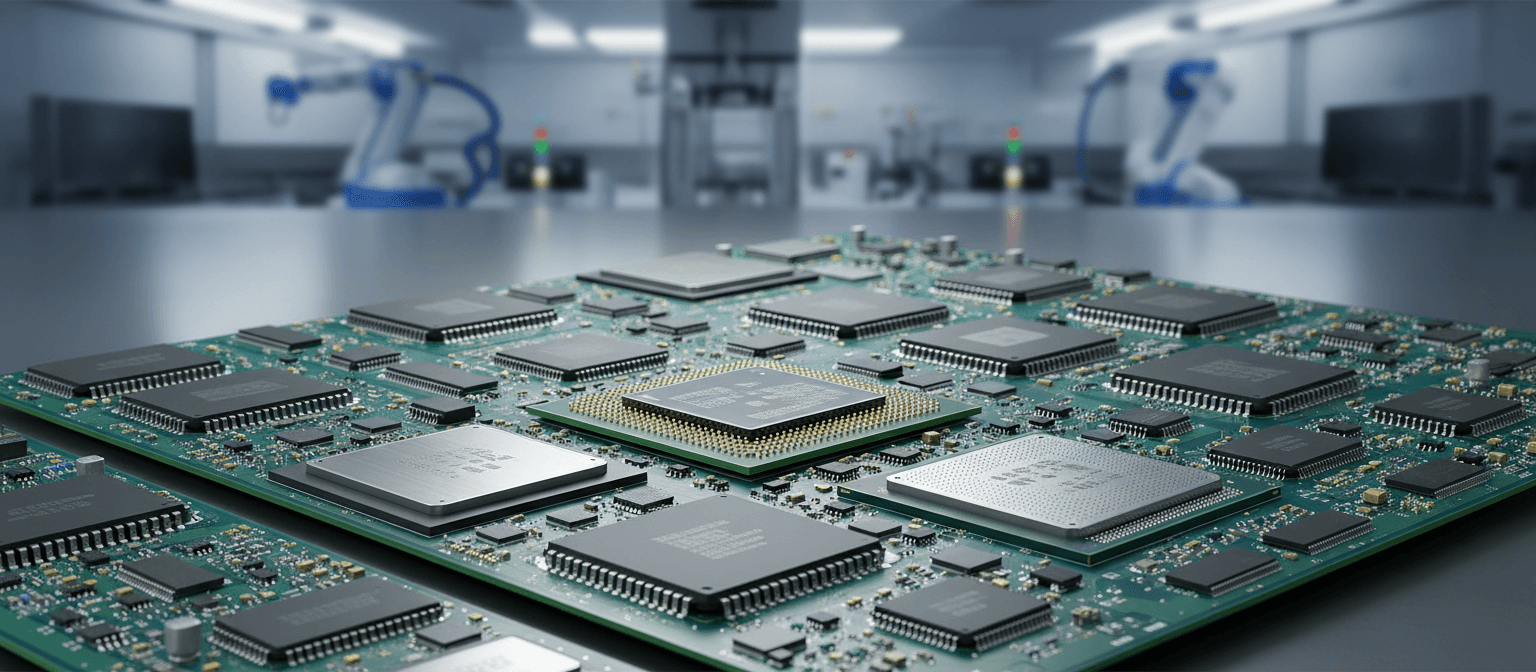
If complex operating systems, high-performance computing, and multiple cores are required, ARM Cortex-A or x86-based MPUs are more suitable. Selection Criteria:
- Operating frequency and overall computing performance.
- Interfaces and peripherals.
- Power modes and battery life.
- Vendor support and programming environment.
ADC/DAC Converters and Memory Chips
ADC and DAC chips convert analog signals to digital and vice versa; they are essential for reading precise data from sensors and controlling actuators. When selecting, you should evaluate sampling rate, bit depth (12/16/24 bit), number of input channels, and reference voltage stability.
Memory chips (NAND, NOR, SRAM, DRAM, EEPROM, Flash) are selected based on data storage requirements. For example, SPI NOR Flash is suitable for firmware, NAND Flash for large data blocks, and SRAM for high-speed cache memory.
Application Areas of Sensor Interface Chips
Sensor interface chips combine ADCs, multiplexers, signal conditioners, and dedicated protocols (I2C, SPI, 1-Wire). When connecting temperature, humidity, pressure, light, and motion sensors to the system, pay attention to the interface level (I2C vs SPI), isolation requirements, and filtering functions.
- Quick example: An industrial control system requires a multi-channel ADC and a differential input driver.
- In medical and precision measurement applications, low noise, calibration capabilities, and safety certifications are crucial.
Microchip Supply and B2B Solutions in Azerbaijan
This section explains the main supply risks, why ARTEK.az and ARTEK PRO services are beneficial, and how to select microcomponents suitable for industrial equipment using concrete data. Here, you will see lead times, compliance certificates, and project-based procurement strategies.
Challenges in Finding Original Microchips
Authenticity is the primary concern. To verify whether a delivered chip is an authentic brand item, matching the serial number, lot code, and manufacturer datasheet is required. A recurring issue for almost all vendors is reworked or second-hand modules; therefore, visual inspection and laboratory analyses such as XRF/FTIR testing are essential.
Lead time directly impacts project planning. Long lead times and unstable inventory expose you to production downtime. To mitigate risks, you should use alternative distributors, safety stock, and a scheduled purchasing plan. It is beneficial to require penalty clauses and delivery guarantees in procurement contracts.
Secure Supply with ARTEK.az and ARTEK PRO
The ARTEK.az platform provides centralized technical information such as product datasheets, EOL (End-of-Life) notifications, and procurement history. ARTEK PRO provides supply chain management and documentation (CofC, RoHS, REACH) for large B2B orders. These documents play a key role in your quality control process.
Practical steps you can take:
- Verify the part number prior to purchasing.
- Perform visual and functional inspections upon receipt.
- Request third-party laboratory testing for critical parts.
When working with ARTEK PRO, it is possible to clearly specify the warranty period and spare parts policy in your contract.
B2B Microcomponents for Industrial Automation
Microchips selected for industrial PLCs, inverters, and industrial sensors require high reliability and temperature stability. You should select suitable components based on the automation level, EMI/EMC requirements, and long-term availability (lifecycle). For instance, industrial-grade microcontrollers come with a rating from -40°C to +85°C; note this rating in your project documentation.
In B2B purchasing, volume discounts, JIT (Just-in-Time) delivery, and consignment warehouse services can free you from inventory costs. Supply documentation required based on project needs includes lot traceability and MIL/IEC compliance certificates. Viewing these documents in advance on ARTEK.az speeds up your component selection process.
Supply Chain and Quality Standards
This section explains methods to optimize delivery times, points for adhering to industrial specifications, and concrete steps to verify microchip authenticity. You will learn pragmatic checks and logistics measures to ensure products are delivered on time and according to specifications.
Delivery Lead Time and Efficient Logistics
Conduct advance inventory planning to shorten the order cycle. Set buffer time for production lead times, transport, and customs delays.
- Priority areas: Minimum stock levels for critical components, multi-sourcing vendor policies, and JIT (Just-in-Time) flow.
- When evaluating logistics partners, require delivery insurance, tracking systems, and temperature control capabilities.
- Set up EDI or online portal integration for order tracking. This enables early detection of delay signals and accelerates fallback plans.
Compliance with Industrial Parameters
Verify the core parameters specified in the datasheet for each microchip (operating temperature, power requirements, timing, interface levels).
- Prepare a test plan: Must include functional, parametric, and stress tests.
- Request certificates and compliance documents: Compliance with RoHS, REACH, IPC standards, and ISO 9001/AS9100 documents where necessary.
- Ensure tracebility of results as a unit of measurement — store them alongside part numbers, lot traces, and test reports.
Ensuring True Product Authenticity
To confirm authenticity, first request Manufacturer’s Certificates of Conformance (CofC) and traceability documents from the supplier.
- Perform visual inspection: Package markings, lot codes, and packaging characteristics must match the manufacturer's samples.
- Apply laboratory checks: Detect counterfeit or remanufactured parts using XRF/FTIR analysis, optical microscopy, and functional testing.
- Use continuous performance metrics to evaluate suppliers — create ratings based on indicators such as delivery accuracy, defect rate, and document completeness.
Technical Support and Product Configuration
This section provides concrete instructions on required documents, configuration steps, and manufacturer-specific adjustments. The goal: to make your devices operational immediately and avoid costly mistakes.
Importance of Technical Information
Technical documentation (datasheets, application notes, footprints, Gerber files, and pinout tables) is fundamental for the correct application of a component. You will find voltage, power limits, I/O levels, and thermal data in the datasheet; you must rigorously cross-check these parameters with your project requirements.
Reading user guides and application notes prevents lost time during assembly. SMT reflow profiles and BGA soldering instructions demand special attention; an incorrect profile can cause thermal damage to the board.
You also need software documentation (firmware requirements, pin multiplexing, bootloader notes). These documents streamline the setup process and ensure consistency.
Selection Options across Verified Brands
Procuring from verified brands comes with documented paper trails and authenticity guarantees, allowing you to prove they are original components. On ARTEK.az or trusted B2B suppliers, brand certificates, lot traceability, and test results should be clearly displayed.
When making a choice, consider competitive alternatives: second-source devices offering the same functionality improve pricing and availability. However, compare every second source against the datasheet; differences in pinout, power, and timing can disrupt the project.
Perform the following checks prior to purchase:
- Lot number and date of manufacture
- ESD levels
- Public/transparent test reports
- Isolation and thermal measurements
These checks will ensure the component works reliably in your project.
Modern Applications and Trends
Microchips meet precise functional requirements ranging from industrial control to smart devices and laboratory equipment. Key factors you need: performance, power consumption, interface support, and supply chain reliability.
PLCs and Industrial Automation Systems
Microcontrollers and real-time processors used in PLC boards provide signal processing and deterministic control. When selecting, you need to pay attention to specific parameters such as operating temperature, I/O count, real-time clock, and fail-safe functions.
Integrated communication controllers are essential for widely used industrial protocols (Modbus, ProfiNet, EtherCAT). To increase system longevity, you should require temperature resistance, EMI protection, and industrial certifications.
Energy efficiency and latency are critical. Low-power variants and fast ADC/DAC converters help capture sensor signals accurately. Authenticity in supply and industry-specific registration documents will meet regulatory and warranty requirements for you.
Components for Inverters, IoT, and Smart Devices
In inverters and smart energy management, powerful power management chips, MOSFET driver modules, and power-harvesting controllers play a key role. You need power components operating over a wide temperature range for high efficiency.
In IoT devices, low power consumption, BLE/Wi-Fi/LoRa interfaces, and security chips like TrustZone or HSM providing secure boot are important. You should also plan for remote device management and OTA (over-the-air) updates.
In smart appliances, sensor interfaces, smooth DSP/NPU-supported microchips for edge AI, and energy harvesting module support are primary metrics when evaluating a vendor's offer. Delivery lead time and MOQ (Minimum Order Quantity) will affect your project scale.
The Role of Microchips in Laboratory Equipment
Laboratory equipment demands high-precision AD/DA converters, low signal noise, and stable reference voltages. The components you need must ensure measurement accuracy and repeatability.
Multi-channel ADCs, highly stable PLL/TCXOs for timing, and low-drift op-amps are critical in experimental devices. You should consider calibration, isolation, and protective interface requirements (ESD, input protection).
The availability of documentation during supply — component datasheets, ATE compliance, and isolation certificates — should be your primary selection criterion. Original, industrial-grade components with detailed technical support will ensure the continuity of laboratory performance.
Keyword Strategies for the Azerbaijan Market
Start keyword selection based on local niche and industrial needs. Focusing on long-tail phrases will help you achieve faster visibility in competitive searches.
Identify your target audience: industrial suppliers, electronics engineers, and B2B buyers. Highlight the terms they search for — such as "original IC supply", "SMT components Baku", and "BGA chip ordering".
Place keywords naturally within the content structure. Headings, meta descriptions, and the first 100 words are vital; use the main phrase in several places, but avoid artificial repetition.
Balance competition and volume: maintain a balance between high-volume general terms and niche expressions. You can use the following frequently used category examples:
- Original IC, original microcontroller
- SMT components, hundreds of batches
- BGA chip, reballing, and service
Consider Azerbaijani and Russian variants for local optimization. Language and terminology differences can affect your search results.
Target technical and commercial intent keywords on separate pages. Use technical parameters and datasheet terms for product pages, and problem-solving oriented question and guide keywords for blogs.
Periodically adjust your keyword portfolio based on analytics. Check performance monthly or quarterly, add new trends, and remove weak performers.