
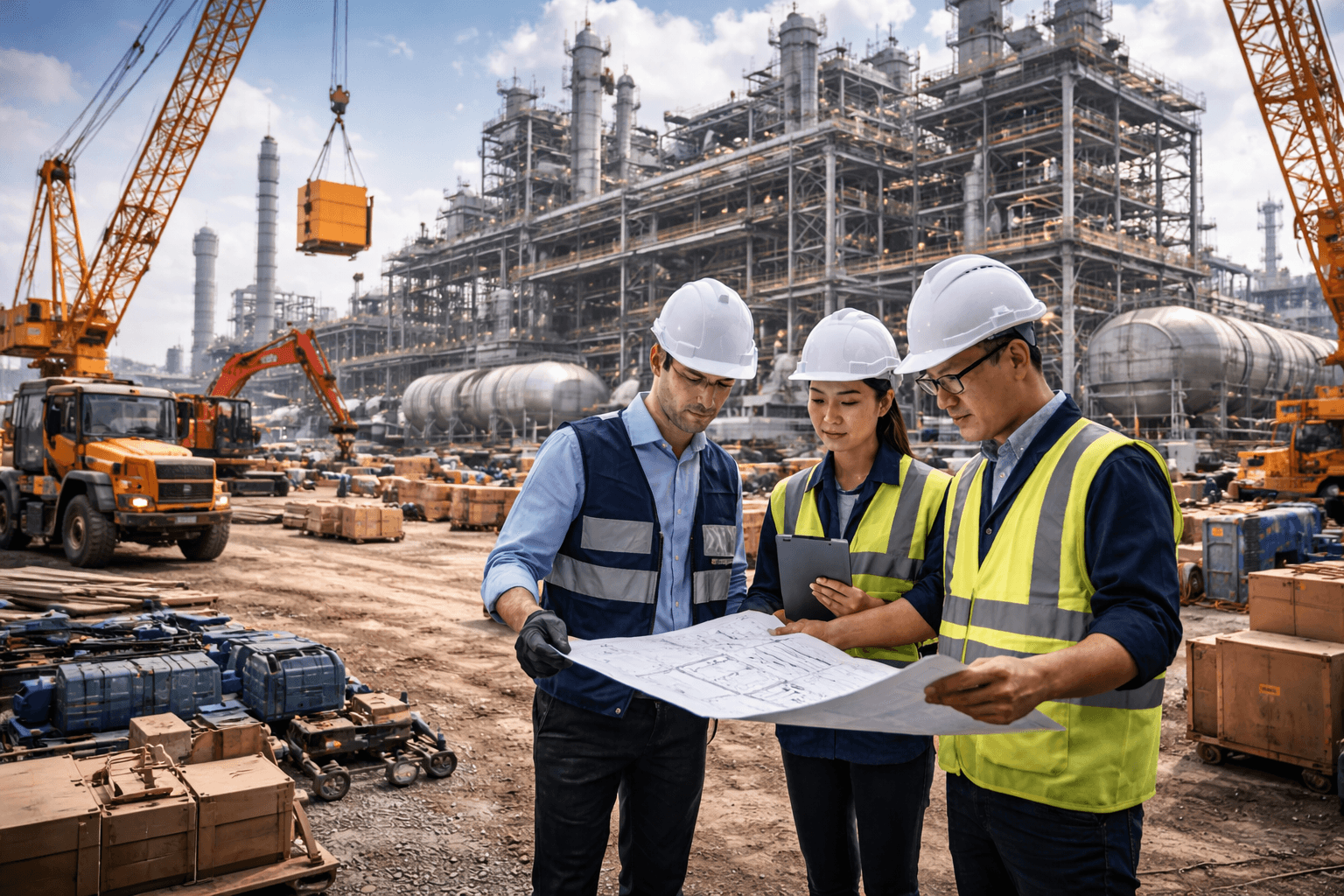
Equipment Selection for Industrial Projects: Risks, Strategic Approach, and B2B Decision Model
The success of industrial projects is determined not only by ideas and investments but also by making the right technical decisions.At the center of these decisions is equipment selection. Whether it is a manufacturing plant, an energy project, or logistics infrastructure, the equipment used directly affects the project’s efficiency, profitability, and sustainability.With the increasing number of industrial and infrastructure projects in Azerbaijan, this issue is becoming even more important.However, in practice, many companies consider equipment selection as a simple purchasing process. In reality, this process requires multi-level analysis, risk assessment, and long-term planning.Incorrect equipment selection does not only result in additional costs. It can lead to production downtime, project delays, and even violations of contractual obligations.Therefore, equipment selection should be considered not as a technical decision, but as a strategic decision.The Role of Equipment Selection in Industrial ProjectsEquipment acts as the “technical backbone” of a project.The selected technologies and systems determine production capacity, product quality, and operational costs.For example, choosing low-efficiency equipment may appear cheaper at the initial stage, but in the long term it can lead to increased energy costs and frequent technical failures.On the other hand, selecting highly advanced and expensive equipment is not always the optimal solution. In this case, the investment payback period may become longer.The correct approach is to make a balanced selection according to the specific requirements of the project.Main Risk CategoriesEquipment selection in industrial projects involves several major risk categories.Technical RisksTechnical risks are the most critical category.These risks include:equipment failing to provide the required performanceincompatibility with existing systemsincorrect operation or technical failuresFinancial RisksFinancial risks are related to investment and operational costs.Incorrect selection may lead to additional expenses and budget overruns.Logistics RisksLogistics risks are associated with:delivery delayscustoms issuessupply chain disruptionsOperational RisksOperational risks occur during equipment operation.They include:lack of service supportshortage of spare partsinsufficient technical support